
What Is Cancer? Causes, Symptoms, Types, Diagnosis & Treatment Guide
Learn what is cancer, its causes, symptoms, common types, stages, diagnosis methods, treatment options, and prevention tips in this complete cancer awareness guide.
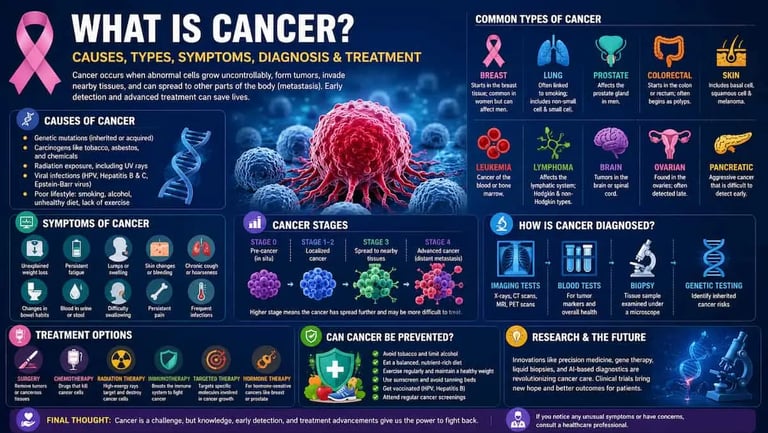
Cancer is a broad term that refers to a group of diseases characterized by the uncontrolled growth and spread of abnormal cells in the body. These abnormal cells can form tumors or invade nearby tissues and organs. Cancer can occur in almost any part of the body.
What Is Cancer? Causes, Types, Symptoms, Diagnosis & Treatment
Cancer is one of the most serious health conditions affecting millions of people worldwide. It occurs when abnormal cells in the body grow uncontrollably and spread to surrounding tissues or other organs. Although cancer can develop in almost any part of the body, early detection, proper treatment, and healthy lifestyle choices can significantly improve survival rates and quality of life.
In recent years, advancements in medical research, early screening technologies, and targeted therapies have transformed cancer treatment, giving hope to patients across the globe. Understanding the causes, symptoms, and available treatment options is essential for awareness and prevention.
What Is Cancer?
Cancer is a disease caused by the uncontrolled growth of abnormal cells. Normally, cells in the body grow, divide, and die in a regulated manner. However, cancer cells ignore these natural controls and continue multiplying. These abnormal cells may form tumors, damage nearby tissues, and spread through the bloodstream or lymphatic system.
The spread of cancer from one part of the body to another is known as metastasis, which is often responsible for severe complications and advanced stages of the disease.
Cancer is not a single disease but a group of more than 100 different conditions. Each type behaves differently depending on where it starts and how fast it spreads.
Major Causes of Cancer
Cancer develops due to changes or mutations in genes that control cell growth. These mutations may occur naturally or be triggered by external factors.
1. Tobacco Use
Smoking and tobacco consumption are among the leading causes of cancer worldwide. Tobacco products contain harmful chemicals that damage DNA and increase the risk of lung, throat, mouth, and bladder cancers.
2. Unhealthy Lifestyle
Poor dietary habits, lack of exercise, obesity, and excessive alcohol consumption can increase cancer risk. Processed foods, sugary drinks, and sedentary lifestyles contribute to chronic inflammation and hormonal imbalance.
3. Radiation Exposure
Long-term exposure to ultraviolet (UV) rays from sunlight or radiation from medical and industrial sources may increase the risk of skin cancer and other forms of cancer.
4. Viral and Bacterial Infections
Certain infections are linked to cancer development, including:
Human Papillomavirus (HPV)
Hepatitis B and Hepatitis C
Epstein-Barr virus
Helicobacter pylori infection
5. Genetic Factors
Some cancers run in families because inherited gene mutations can increase susceptibility. People with a family history of breast, ovarian, or colorectal cancer may have a higher risk.
6. Environmental Pollution
Exposure to asbestos, industrial chemicals, pesticides, and air pollution can damage healthy cells and trigger cancer formation.
Common Types of Cancer
There are many different types of cancer, but some are more common than others.
Breast Cancer
Breast cancer begins in breast tissue and is one of the most common cancers among women. Early detection through mammograms greatly improves treatment outcomes.
Lung Cancer
Often associated with smoking, lung cancer is one of the deadliest cancers globally. Symptoms may include persistent cough, chest pain, and breathing difficulties.
Prostate Cancer
This cancer affects the prostate gland in men and is common in older adults. Regular screening can help detect it early.
Colorectal Cancer
Colorectal cancer develops in the colon or rectum and often starts as non-cancerous polyps that become cancerous over time.
Skin Cancer
Skin cancer includes melanoma, basal cell carcinoma, and squamous cell carcinoma. Excessive sun exposure is a major risk factor.
Leukemia
Leukemia is a blood cancer that affects white blood cells and bone marrow. It interferes with the body’s ability to fight infections.
Lymphoma
Lymphoma affects the lymphatic system, which is part of the immune system. It includes Hodgkin lymphoma and non-Hodgkin lymphoma.
Brain Cancer
Brain tumors can affect memory, movement, and other neurological functions. Some forms are highly aggressive and life-threatening.
Pancreatic and Ovarian Cancer
These cancers are often difficult to detect early because symptoms may appear only in advanced stages.
Cancer Symptoms and Warning Signs
Cancer symptoms vary depending on the type and stage of the disease. However, some common warning signs should never be ignored.
Common Symptoms Include:
Unexplained weight loss
Persistent fatigue
Chronic pain
Lumps or swelling
Skin changes
Unusual bleeding
Persistent cough or hoarseness
Changes in bowel or bladder habits
Difficulty swallowing
Experiencing one or more of these symptoms does not always mean cancer, but consulting a healthcare professional is important for proper evaluation.
Understanding Cancer Stages
Doctors use staging to determine how far cancer has spread in the body.
Stage 0
Abnormal cells are present but have not spread.
Stage 1 and 2
Cancer is localized and limited to a specific area.
Stage 3
Cancer has spread to nearby tissues or lymph nodes.
Stage 4
Advanced cancer with metastasis to distant organs.
Cancer staging helps doctors decide the best treatment approach and estimate prognosis.
How Cancer Is Diagnosed
Early diagnosis significantly increases the chances of successful treatment. Doctors may use several methods to identify cancer.
Imaging Tests
Technologies like X-rays, CT scans, MRI scans, ultrasound, and PET scans help visualize tumors inside the body.
Blood Tests
Blood tests may detect tumor markers, infections, or abnormalities related to cancer.
Biopsy
A biopsy involves removing a small tissue sample for microscopic examination. It is one of the most accurate ways to confirm cancer.
Genetic Testing
Genetic testing helps identify inherited mutations and guide personalized treatment strategies.
Cancer Treatment Options
Cancer treatment depends on the type, location, stage, and overall health of the patient.
Surgery
Surgery removes cancerous tumors or affected tissues and is commonly used for localized cancers.
Chemotherapy
Chemotherapy uses powerful drugs to destroy rapidly dividing cancer cells. It may be combined with other treatments.
Radiation Therapy
Radiation therapy uses high-energy radiation to target and kill cancer cells while minimizing damage to healthy tissue.
Immunotherapy
Immunotherapy strengthens the immune system to recognize and attack cancer cells more effectively.
Targeted Therapy
Targeted therapy focuses on specific molecules involved in cancer growth, reducing damage to healthy cells.
Hormone Therapy
Hormone therapy is commonly used for hormone-sensitive cancers such as breast and prostate cancer.
Can Cancer Be Prevented?
Although not all cancers can be prevented, healthy habits can lower the risk significantly.
Tips to Reduce Cancer Risk
Avoid smoking and tobacco products
Limit alcohol consumption
Eat a balanced diet rich in fruits and vegetables
Exercise regularly
Maintain a healthy body weight
Protect skin from excessive sunlight
Get vaccinated against HPV and Hepatitis B
Undergo regular health screenings
Routine screenings like mammograms, Pap smears, colonoscopies, and prostate exams can help detect cancer early when treatment is most effective.
Advances in Cancer Research
Modern cancer research is rapidly evolving. Scientists are developing innovative treatments such as:
Precision medicine
Gene therapy
Liquid biopsies
Personalized immunotherapy
AI-powered diagnostic tools
Clinical trials continue to improve survival rates and offer new hope for patients with advanced cancers. Research is also helping doctors understand how lifestyle, genetics, and environmental factors influence cancer development.
Final Thoughts
Cancer remains a major global health challenge, but awareness, early detection, and modern medical advancements are improving outcomes every year. Understanding the causes, symptoms, and treatment options empowers individuals to take proactive steps toward prevention and early diagnosis.
Living a healthy lifestyle, attending regular screenings, and seeking medical attention for unusual symptoms can make a significant difference. As research continues to advance, the future of cancer treatment looks increasingly promising.
Related Stories
MicroNews © 2025
MicroNews empowers the generation of tomorrow for a brighter future and hope for every individual.
Thanks For Touch with us
We care about your data in our privacy policy.
Popular Post
Top 10 Calcium-Rich Vegetables for Strong Bones & Better Health
Patala Garuda (Rauvolfia serpentina): Health Benefits, Ayurvedic Uses
Ganga Siuli (Parijata Tree): Benefits, Uses, and Medicinal Properties
Freelancing Explained: How to Start, Earn, and Succeed as a Freelancer
Turmeric Benefits: Uses, Nutrition, Ayurveda Importance & Side Effects
Science of Longevity: New Research Reveals How Diet May Shape Lifespan