
5 Best Yoga Poses for Constipation Relief: Natural Ways to Improve Digestion
Discover the 5 best yoga poses for constipation relief. Learn how simple yoga stretches can improve digestion, stimulate bowel movements, and support gut health naturally.
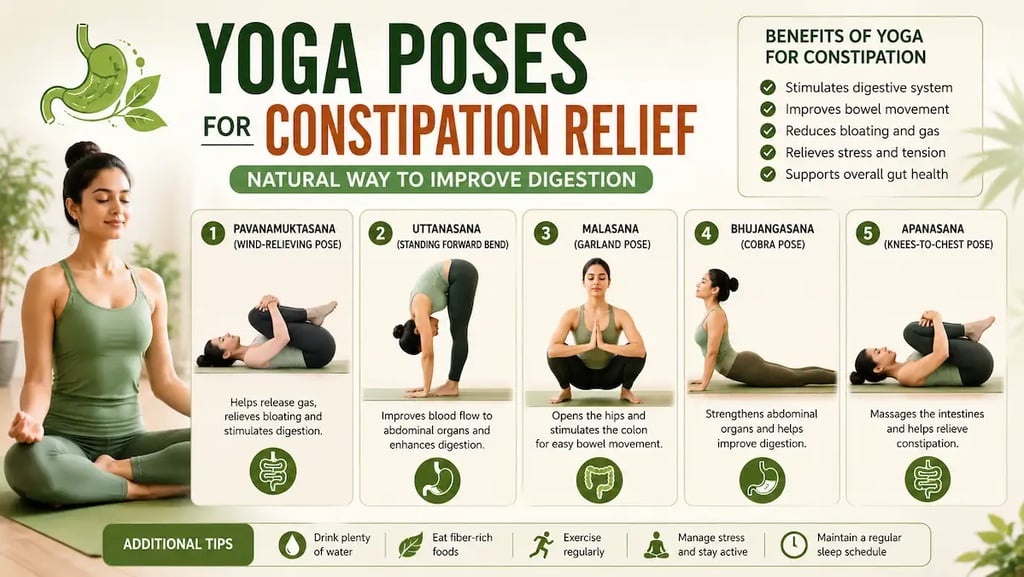
5 Best Yoga Poses for Constipation Relief Naturally
Constipation is a common digestive problem that affects people of all ages. It can cause discomfort, bloating, stomach pain, and difficulty passing stools. While eating fiber-rich foods and drinking enough water are essential, practicing yoga for constipation is another natural and effective way to improve digestion.
Certain yoga poses gently massage the abdominal organs, stimulate bowel movements, and increase blood circulation to the digestive system. Regular practice can help relieve constipation and support overall gut health.
Why Yoga Helps Relieve Constipation
Yoga combines stretching, controlled breathing, and gentle twisting movements that stimulate the digestive tract. These movements help:
Improve intestinal movement
Reduce gas and bloating
Increase blood flow to digestive organs
Relax abdominal muscles
Reduce stress, which can contribute to constipation
Practicing yoga daily for 10–15 minutes may help promote regular bowel movements naturally.
1. Pavanamuktasana (Wind-Relieving Pose)
Pavanamuktasana is one of the most effective yoga poses for relieving gas, bloating, and constipation.
How to Do It
Lie flat on your back.
Bend both knees toward your chest.
Wrap your arms around your knees.
Gently hug your legs close to your body.
Slowly rock from side to side while breathing deeply.
Hold the position for 30–60 seconds.
Benefits
Stimulates the digestive organs
Helps release trapped gas
Relieves bloating
Encourages bowel movements
2. Uttanasana (Standing Forward Bend)
This simple forward bend increases blood circulation to the abdominal organs and promotes healthy digestion.
How to Do It
Stand with your feet hip-width apart.
Inhale deeply.
Exhale and slowly bend forward from your hips.
Let your head relax toward the floor.
Hold your elbows or place your hands on the floor.
Stay in the pose for 30–60 seconds.
Benefits
Improves digestion
Reduces abdominal tension
Enhances blood circulation
Helps relieve constipation naturally
3. Malasana (Garland Pose)
Malasana is a deep squat that naturally supports bowel movement by opening the hips and gently compressing the abdomen.
How to Do It
Stand with your feet slightly wider than hip-width apart.
Lower into a deep squat.
Keep your heels on the floor (use a folded blanket if needed).
Bring your palms together in front of your chest.
Press your elbows gently against your inner knees.
Hold for 30–60 seconds while breathing deeply.
Benefits
Stimulates the colon
Supports healthy bowel movements
Improves pelvic flexibility
Strengthens digestive muscles
4. Bhujangasana (Cobra Pose)
Cobra Pose gently stretches the abdomen and improves the function of digestive organs.
How to Do It
Lie face down on your stomach.
Place your palms beneath your shoulders.
Keep your legs extended.
Inhale and slowly lift your chest.
Keep your elbows slightly bent.
Hold the pose for 20–30 seconds before lowering.
Benefits
Stimulates abdominal organs
Improves digestion
Strengthens the spine
Relieves stomach discomfort
5. Apanasana (Knees-to-Chest Pose)
Apanasana is a relaxing pose that massages the intestines and encourages the release of trapped gas.
How to Do It
Lie comfortably on your back.
Bring both knees toward your chest.
Hug your knees with both arms.
Gently rock from side to side.
Breathe slowly and hold for one minute.
Benefits
Relieves constipation
Reduces bloating
Improves digestion
Releases tension in the lower back
Additional Tips to Prevent Constipation
Along with practicing yoga, follow these healthy habits:
Drink 2–3 liters of water daily.
Eat fiber-rich foods such as fruits, vegetables, and whole grains.
Exercise regularly.
Avoid processed and junk foods.
Maintain a consistent sleep schedule.
Don't ignore the urge to use the bathroom.
Manage stress through meditation or deep breathing exercises.
Precautions
Although yoga is generally safe, keep these precautions in mind:
Practice on an empty stomach or at least 2–3 hours after meals.
Avoid intense poses if you have severe abdominal pain or recent surgery.
Pregnant women and people with chronic medical conditions should consult a healthcare professional before starting yoga.
Stop immediately if you experience dizziness or pain.
Conclusion
Practicing yoga for constipation is a simple, natural, and effective way to improve digestion and maintain a healthy gut. Poses like Pavanamuktasana, Uttanasana, Malasana, Bhujangasana, and Apanasana gently stimulate the digestive system, reduce bloating, and promote regular bowel movements.
For the best results, combine these yoga poses with a balanced diet, proper hydration, and an active lifestyle. If constipation persists for several weeks or is accompanied by severe pain, blood in the stool, or unexplained weight loss, consult a healthcare professional for proper evaluation.
FAQ
1. Can yoga cure constipation permanently?
Yoga can significantly improve digestion and reduce constipation when practiced regularly alongside a healthy diet and lifestyle.
2. Which yoga pose works fastest for constipation?
Pavanamuktasana (Wind-Relieving Pose) is often considered one of the most effective poses for immediate relief from gas and constipation.
3. How long should I practice yoga for constipation?
Practicing for 10–20 minutes daily can help improve digestive health and support regular bowel movements.
4. Is yoga better than laxatives?
Yoga addresses the underlying causes of poor digestion naturally, while laxatives provide temporary relief. Consult a doctor before relying on laxatives regularly.
5. Can beginners practice these yoga poses?
Yes. These poses are beginner-friendly, but they should be performed gently and with proper technique to avoid injury.
MicroNews © 2025
MicroNews empowers the generation of tomorrow for a brighter future and hope for every individual.
Thanks For Touch with us
We care about your data in our privacy policy.
Popular Post
Top 10 Calcium-Rich Vegetables for Strong Bones & Better Health
Patala Garuda (Rauvolfia serpentina): Health Benefits, Ayurvedic Uses
Ganga Siuli (Parijata Tree): Benefits, Uses, and Medicinal Properties
Freelancing Explained: How to Start, Earn, and Succeed as a Freelancer
Turmeric Benefits: Uses, Nutrition, Ayurveda Importance & Side Effects
Science of Longevity: New Research Reveals How Diet May Shape Lifespan