
What Is Cholesterol? Symptoms, Causes, Treatment, and Prevention of High Cholesterol
Cholesterol is a waxy, fat-like substance that plays an important role in keeping your body healthy. It is naturally produced by the liver and is also found in certain foods such as meat, dairy products, and eggs. Your body needs cholesterol to build healthy cells, produce hormones, make vitamin D, and help digest food. However, when cholesterol levels become too high, it can increase the risk of serious health problems, especially heart and stroke.
High cholesterol is one of the most common health conditions worldwide, affecting millions of people. The dangerous part is that it usually develops silently without noticeable symptoms. Many people only discover they have high cholesterol after a routine blood test or when complications like a heart attack occur. Understanding cholesterol, its causes, symptoms, and treatment options can help you maintain better heart health and prevent life-threatening conditions.
Understanding Cholesterol
Cholesterol travels through the bloodstream in small packages called lipoproteins. There are two major types of cholesterol:
LDL Cholesterol (Bad Cholesterol)
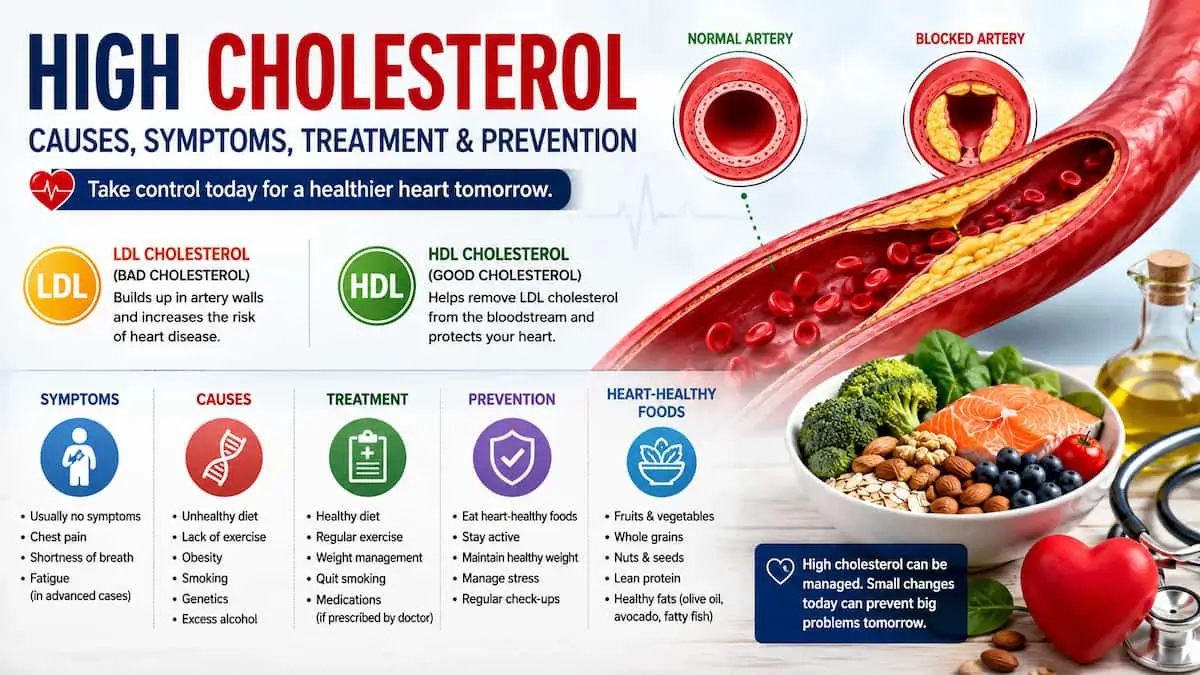
Low-density lipoprotein (LDL) cholesterol is commonly called “bad cholesterol.” High levels of LDL can cause cholesterol to build up in the walls of arteries. Over time, this buildup forms plaque, which narrows the arteries and restricts blood flow. This condition is known as atherosclerosis and can increase the risk of heart attack, stroke, and peripheral artery disease.
HDL Cholesterol (Good Cholesterol)
High-density lipoprotein (HDL) cholesterol is known as “good cholesterol.” HDL helps remove excess cholesterol from the bloodstream and carries it back to the liver, where it is processed and removed from the body. Higher HDL levels are generally linked with better heart health.
Triglycerides
Triglycerides are another type of fat found in the blood. High triglyceride levels combined with high LDL or low HDL cholesterol can further increase the risk of cardiovascular disease.
Symptoms of High Cholesterol
High cholesterol is often called a “silent killer” because it usually does not cause obvious symptoms. Most people with high cholesterol feel completely normal. This is why regular cholesterol testing is essential, especially for adults over 20 or individuals with risk factors.
In some severe cases, high cholesterol may eventually lead to symptoms related to blocked arteries, including:
Chest pain or angina
Shortness of breath
Fatigue during physical activity
Heart attack
Stroke
Pain or numbness in the legs
Some people with inherited high cholesterol may develop visible signs such as:
Yellowish deposits around the eyes
Fatty skin bumps called xanthomas
White or gray rings around the cornea
However, these signs are less common and often appear only when cholesterol levels are extremely high.
Causes of High Cholesterol
Several lifestyle and genetic factors contribute to high cholesterol levels. Understanding these causes can help prevent and manage the condition effectively.
Unhealthy Diet
A poor diet is one of the leading causes of high cholesterol. Foods rich in saturated fats and trans fats can increase LDL cholesterol levels. Common unhealthy foods include:
Fried foods
Fast food
Processed snacks
Red meat
Butter and full-fat dairy products
Baked goods containing hydrogenated oils
Excess sugar and refined carbohydrates can also raise triglyceride levels.
Lack of Physical Activity
Regular exercise helps increase HDL cholesterol while lowering LDL cholesterol and triglycerides. A sedentary lifestyle can negatively affect cholesterol levels and overall cardiovascular health.
Obesity and Overweight
Being overweight or obese can increase bad cholesterol levels and reduce good cholesterol. Excess body fat, especially around the abdomen, is strongly linked to high cholesterol and heart disease.
Smoking
Smoking damages blood vessels and lowers HDL cholesterol levels. It also promotes plaque buildup in the arteries, increasing the risk of cardiovascular disease.
Excess Alcohol Consumption
Drinking too much alcohol can increase triglyceride levels and contribute to obesity, high blood pressure, and heart disease.
Age and Gender
As people age, cholesterol levels naturally rise. Men are generally at higher risk earlier in life, while women’s risk increases after menopause.
Genetics and Family History
Some individuals inherit a condition called familial hypercholesterolemia, which causes extremely high cholesterol levels even with a healthy lifestyle. A family history of heart disease or high cholesterol significantly increases risk.
Medical Conditions
Certain health conditions can contribute to high cholesterol, including:
Hypothyroidism
Kidney disease
Liver disease
Polycystic ovary syndrome (PCOS)
Risk Factors for High Cholesterol
Several factors increase the likelihood of developing high cholesterol, such as:
Poor eating habits
Physical inactivity
Smoking
Excessive alcohol intake
Obesity
Stress
High blood pressure
Diabetes
Family history of cholesterol problems
People with multiple risk factors should monitor their cholesterol levels regularly.
Diagnosis of High Cholesterol
High cholesterol is diagnosed through a blood test called a lipid profile or lipid panel. This test measures:
Total cholesterol
LDL cholesterol
HDL cholesterol
Triglycerides
Doctors usually recommend fasting for several hours before the test. Adults should have their cholesterol checked every 4–6 years, or more often if they have risk factors.
Normal Cholesterol Levels
General cholesterol guidelines include:
Total cholesterol: Less than 200 mg/dL
LDL cholesterol: Less than 100 mg/dL
HDL cholesterol: 60 mg/dL or higher
Triglycerides: Less than 150 mg/dL
Your healthcare provider may recommend different targets depending on your age, medical history, and overall heart disease risk.
Treatment for High Cholesterol
Treatment for high cholesterol usually involves lifestyle changes, medication, or a combination of both.
Heart-Healthy Diet
Eating a balanced diet is one of the most effective ways to lower cholesterol naturally. Important dietary changes include:
Reduce saturated fats and trans fats
Eat more fruits and vegetables
Increase fiber intake through oats, beans, and whole grains
Choose lean protein sources such as fish and chicken
Use healthy fats like olive oil and nuts
Limit sugary foods and processed snacks
Foods rich in omega-3 fatty acids, such as salmon, flaxseeds, and walnuts, can also support heart health.
Regular Exercise
Physical activity can improve cholesterol levels and strengthen the heart. Experts recommend at least 150 minutes of moderate exercise per week. Activities may include:
Walking
Jogging
Cycling
Swimming
Yoga
Exercise helps raise HDL cholesterol while lowering LDL cholesterol and triglycerides.
Weight Management
Losing even a small amount of weight can improve cholesterol levels significantly. Combining healthy eating with regular exercise is the most effective strategy for long-term weight management.
Quit Smoking
Stopping smoking can quickly improve HDL cholesterol levels and reduce heart disease risk. Within a year of quitting, the risk of heart disease decreases significantly.
Limit Alcohol Intake
Moderate alcohol consumption may slightly raise HDL cholesterol, but excessive drinking increases health risks. Limiting alcohol intake is recommended for overall health.
Medications for High Cholesterol
If lifestyle changes are not enough, doctors may prescribe cholesterol-lowering medications.
Statins
Statins are the most commonly prescribed drugs for high cholesterol. They work by reducing cholesterol production in the liver. Common statins include:
Atorvastatin
Rosuvastatin
Simvastatin
Statins can significantly lower LDL cholesterol and reduce the risk of heart attack and stroke.
Other Medications
Other medications may include:
Bile acid sequestrants
Cholesterol absorption inhibitors
PCSK9 inhibitors
Fibrates
Niacin
Your doctor will recommend the best treatment based on your cholesterol levels and overall health.
Complications of High Cholesterol
Untreated high cholesterol can lead to serious complications, including:
Coronary artery disease
Heart attack
Stroke
Peripheral artery disease
High blood pressure
Early diagnosis and proper management are essential to prevent these complications.
How to Prevent High Cholesterol
Preventing high cholesterol involves adopting healthy lifestyle habits, such as:
Eating nutritious foods
Exercising regularly
Maintaining a healthy weight
Avoiding smoking
Managing stress
Getting regular health check-ups
Small daily changes can make a big difference in long-term heart health.
Conclusion
Cholesterol is an essential substance that supports many important bodily functions, but high cholesterol levels can become dangerous if left untreated. Since high cholesterol usually does not cause noticeable symptoms, regular screening is vital for early detection. Factors such as poor diet, lack of exercise, obesity, smoking, and genetics can all contribute to elevated cholesterol levels.
Fortunately, high cholesterol can often be managed through healthy lifestyle changes, including a balanced diet, regular exercise, weight management, and quitting smoking. In some cases, medications may also be necessary to reduce cholesterol and protect heart health.
By understanding the causes, symptoms, and treatment options for high cholesterol, individuals can take proactive steps to lower their risk of heart disease and live a healthier life. If you are concerned about your cholesterol levels, consult a healthcare professional for proper evaluation and guidance.