
Ethanol Fuel in India: Government Approval, Benefits, Uses, Risks & Future
Learn about ethanol fuel in India, its production process, government approval for E20 petrol, benefits, disadvantages, impact on older engines, and future prospects for renewable energy.
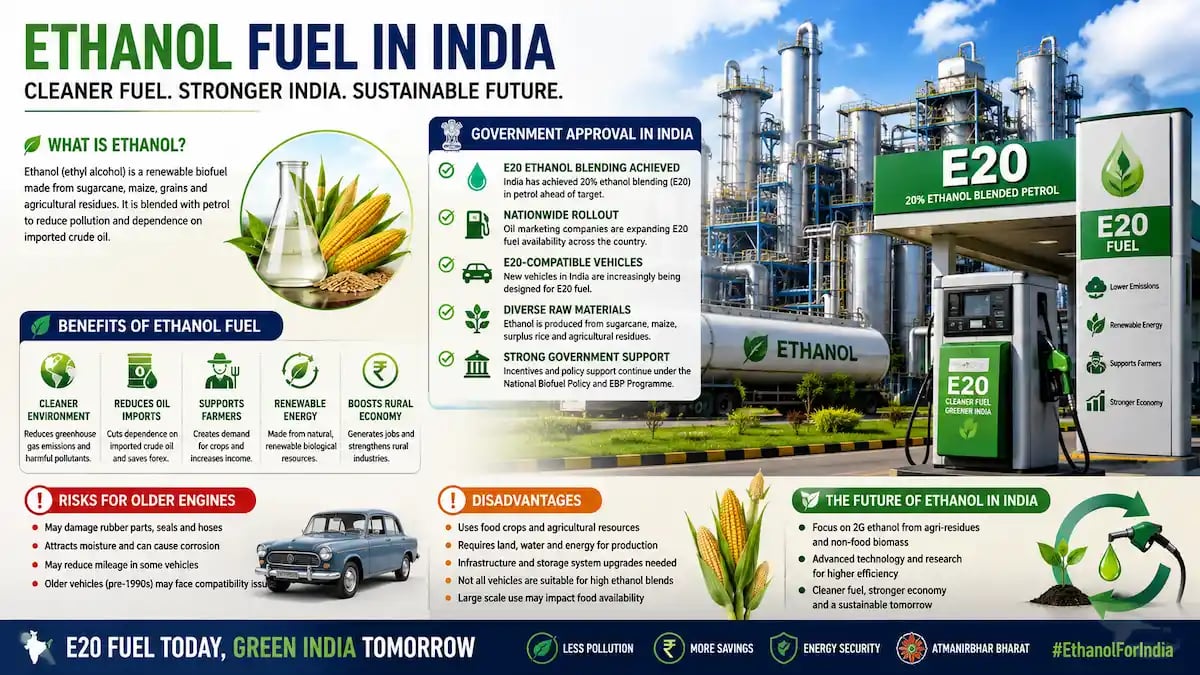
Ethanol Fuel in India: Benefits, Uses, Government Approval, Risks, and Future Prospects
What is Ethanol?
Ethanol, also known as ethyl alcohol, is a renewable biofuel produced from plant-based materials such as sugarcane, corn, maize, damaged food grains, rice, and agricultural residues. It is a clear, colorless liquid widely used as a fuel additive to reduce dependence on fossil fuels and lower harmful vehicle emissions.
As countries worldwide seek cleaner energy alternatives, ethanol has become an important component of sustainable transportation fuels.
How is Ethanol Produced?
Ethanol is primarily produced through the fermentation of sugars and starches present in crops such as sugarcane and corn. The process involves:
Extraction of sugars or starches from raw materials.
Conversion of starch into sugar through enzymatic treatment.
Fermentation using yeast to convert sugar into alcohol.
Distillation and purification to obtain fuel-grade ethanol.
Blending with petrol for use in vehicles.
Modern technologies also allow the production of second-generation (2G) ethanol from agricultural waste, crop residues, bamboo, and other non-food biomass, making ethanol production more sustainable.
also read: oil crisis in india
Ethanol Fuel Approval in India
India has officially approved ethanol blending in petrol as part of its efforts to reduce crude oil imports and promote renewable energy.
Current Indian Government Approval
The Government of India launched the National Biofuel Policy and the Ethanol Blended Petrol (EBP) Programme to encourage ethanol usage.
Key Updates (2025–2026)
India has successfully achieved 20% ethanol blending (E20) in petrol ahead of its original target.
The Ministry of Petroleum and Natural Gas has directed oil marketing companies to expand E20 fuel availability across the country.
New vehicles manufactured in India are increasingly being designed as E20-compatible vehicles.
Ethanol is being produced from sugarcane, maize, surplus rice, and agricultural residues to meet growing demand.
The government continues to provide incentives for ethanol production under various biofuel initiatives.
These measures aim to reduce India's dependence on imported crude oil while lowering carbon emissions and supporting farmers.
Countries Where Ethanol is Approved as Fuel
Many countries have adopted ethanol-blended fuels to reduce pollution and improve energy security.
Brazil
Brazil is a global leader in ethanol fuel usage. Most vehicles can run on pure ethanol or flexible fuel blends derived from sugarcane.
United States
The United States produces large quantities of corn-based ethanol. Fuel blends such as E10, E15, and E85 are commonly available.
India
India has rapidly expanded ethanol blending and is promoting E20 fuel nationwide.
European Countries
Countries such as Germany, Sweden, France, and Finland support ethanol blending under renewable energy and climate policies.
Other Countries
Canada
Australia
Thailand
China
Argentina
Colombia
Benefits of Ethanol Fuel
1. Reduces Greenhouse Gas Emissions
Ethanol burns cleaner than conventional petrol and helps reduce carbon dioxide emissions.
2. Decreases Crude Oil Imports
Countries can reduce dependence on imported petroleum products by producing ethanol domestically.
3. Supports Farmers
Ethanol production creates demand for agricultural products such as sugarcane, maize, and surplus grains.
4. Renewable Energy Source
Unlike fossil fuels, ethanol is derived from renewable biological resources.
5. Improves Fuel Combustion
Ethanol contains oxygen, which promotes more complete combustion and can reduce certain harmful emissions.
6. Boosts Rural Economy
The ethanol industry creates employment opportunities in agriculture, transportation, processing, and renewable energy sectors.
Risks of Ethanol in Older Vehicles and Engines
While ethanol offers many benefits, it may create issues for older vehicles and equipment.
Damage to Rubber Components
Older fuel hoses, seals, and gaskets may deteriorate when exposed to ethanol-blended fuel.
Water Absorption
Ethanol attracts moisture from the atmosphere, which can lead to fuel contamination and corrosion.
Fuel System Corrosion
Certain metals used in older engines may be more vulnerable to ethanol-related corrosion.
Reduced Fuel Efficiency
Ethanol contains less energy than petrol, which may slightly reduce mileage in some vehicles.
Vulnerable Engines
Vehicles manufactured before the 1990s and older motorcycles, generators, boats, and lawn equipment may experience compatibility issues.
Owners of older engines should consult manufacturer recommendations before using higher ethanol blends such as E20.
Disadvantages of Ethanol Fuel
Food vs Fuel Debate
Using food crops for fuel production may affect food availability and prices.
Agricultural Resource Usage
Large-scale ethanol production requires land, water, fertilizers, and energy inputs.
Biodiversity Concerns
Expanding biofuel crop cultivation can impact natural ecosystems if not managed sustainably.
Infrastructure Costs
Fuel stations, storage systems, and transportation infrastructure may require upgrades to support higher ethanol blends.
Engine Compatibility Issues
Not all vehicles are designed to handle high ethanol concentrations.
Future of Ethanol in India
India is investing heavily in advanced ethanol technologies.
Second-Generation (2G) Ethanol
Future ethanol production will increasingly rely on agricultural waste such as:
Sustainable Energy Goals
The government aims to:
Reduce oil import bills.
Lower greenhouse gas emissions.
Increase farmer income.
Promote cleaner transportation.
Research and Innovation
Scientists are developing improved fermentation technologies, advanced enzymes, and high-yield biomass conversion methods to make ethanol production more efficient and environmentally friendly.
Conclusion
Ethanol has emerged as one of the most important renewable fuels in the global energy transition. It offers significant environmental and economic benefits, including reduced emissions, enhanced energy security, and increased support for agricultural communities.
India's successful implementation of the Ethanol Blended Petrol (EBP) Programme and nationwide rollout of E20 fuel demonstrate the country's commitment to cleaner and more sustainable transportation. However, challenges such as engine compatibility, agricultural resource management, and food security concerns must be carefully addressed.
With continued government support, technological innovation, and sustainable production practices, ethanol is expected to play a crucial role in India's future energy strategy.
MicroNews © 2025
MicroNews empowers the generation of tomorrow for a brighter future and hope for every individual.
Thanks For Touch with us
We care about your data in our privacy policy.
Popular Post
Top 10 Calcium-Rich Vegetables for Strong Bones & Better Health
Patala Garuda (Rauvolfia serpentina): Health Benefits, Ayurvedic Uses
Ganga Siuli (Parijata Tree): Benefits, Uses, and Medicinal Properties
Freelancing Explained: How to Start, Earn, and Succeed as a Freelancer
Turmeric Benefits: Uses, Nutrition, Ayurveda Importance & Side Effects
Science of Longevity: New Research Reveals How Diet May Shape Lifespan