
Fallopian Tube Cancer: Symptoms, Causes, Risk Factors, Treatment, and Prevention
Introduction
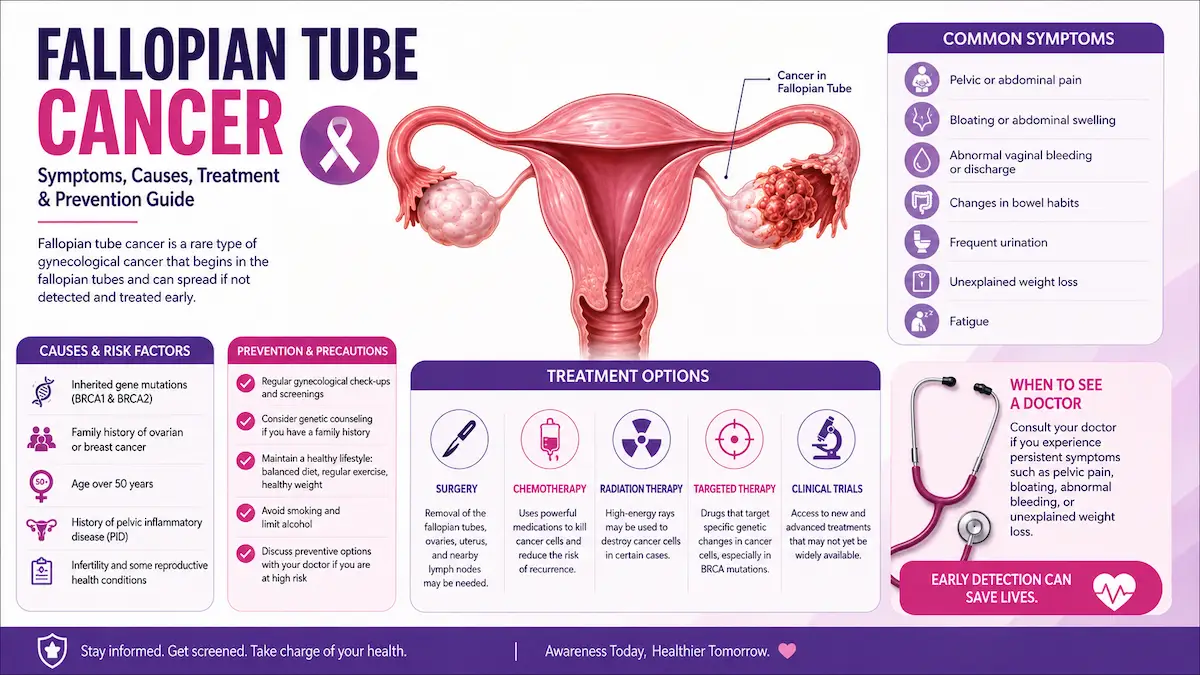
Fallopian tube cancer is a rare type of gynecological cancer that develops in the fallopian tubes, which are the narrow passages connecting the ovaries to the uterus. Although this cancer accounts for a very small percentage of all female reproductive system cancers, it can be serious if not detected and treated early.
Because the symptoms often resemble those of other common gynecological conditions, fallopian tube cancer may go unnoticed during its early stages. Understanding the warning signs, causes, risk factors, treatment options, and preventive measures can help women seek timely medical attention and improve their chances of successful treatment.
In this article, we will explore everything you need to know about fallopian tube cancer, including its symptoms, causes, diagnosis, treatment, and prevention strategies.
What Is Fallopian Tube Cancer?
Fallopian tube cancer occurs when abnormal cells begin to grow uncontrollably within one or both fallopian tubes. These tubes play a vital role in reproduction by carrying eggs from the ovaries to the uterus.
Recent research suggests that many cancers previously classified as ovarian cancers may actually originate in the fallopian tubes. Despite this discovery, primary fallopian tube cancer remains relatively rare compared to other gynecological cancers.
Causes of Fallopian Tube Cancer
The exact cause of fallopian tube cancer remains unknown. However, scientists believe that genetic mutations and certain environmental and hormonal factors may contribute to the development of this disease.
Several risk factors have been associated with an increased likelihood of developing fallopian tube cancer.
1. Inherited Genetic Mutations
Women who carry inherited mutations in the BRCA1 and BRCA2 genes have a significantly higher risk of developing fallopian tube cancer, ovarian cancer, and breast cancer.
2. Family History of Cancer
A strong family history of ovarian, breast, or fallopian tube cancer may increase the risk. Women with close relatives who have had these cancers should discuss genetic counseling with their healthcare provider.
3. Advanced Age
Fallopian tube cancer is most commonly diagnosed in women over the age of 50, particularly after menopause.
4. Chronic Pelvic Inflammation
Long-term pelvic inflammatory disease (PID) may contribute to changes in the fallopian tubes that increase cancer risk.
5. Infertility and Reproductive Factors
Some studies suggest a possible link between infertility and an increased risk of fallopian tube cancer, although the relationship is not fully understood.
6. Personal History of Gynecological Conditions
Women who have previously experienced ovarian abnormalities or certain reproductive system disorders may face a slightly elevated risk.
Symptoms of Fallopian Tube Cancer
One of the biggest challenges in diagnosing fallopian tube cancer is that its symptoms are often vague and similar to those of other less serious conditions.
Common symptoms include:
Abdominal or Pelvic Pain
Persistent discomfort, pressure, or pain in the lower abdomen or pelvis can be an early warning sign.
Abdominal Bloating
Unexplained bloating or swelling that does not improve over time should be evaluated by a healthcare professional.
Abnormal Vaginal Bleeding
Bleeding between periods, after menopause, or unusual spotting may indicate an underlying problem.
Unusual Vaginal Discharge
A watery, clear, or blood-tinged vaginal discharge is one of the more characteristic symptoms of fallopian tube cancer.
Changes in Bowel Habits
Constipation, diarrhea, or other digestive changes that persist without explanation may occur.
Frequent Urination
Pressure from a growing tumor may cause the need to urinate more often.
Unexplained Weight Loss
Sudden weight loss without changes in diet or exercise may be associated with various cancers, including fallopian tube cancer.
Fatigue
Persistent tiredness and low energy levels can be a symptom of advanced disease.
If any of these symptoms continue for more than a few weeks, it is important to seek medical evaluation.
How Is Fallopian Tube Cancer Diagnosed?
Early diagnosis can significantly improve treatment outcomes. Doctors may use several methods to identify fallopian tube cancer.
Pelvic Examination
A healthcare provider may detect abnormalities during a routine gynecological examination.
Imaging Tests
Imaging studies such as:
Ultrasound
CT scan
MRI scan
PET scan
can help identify tumors and determine whether cancer has spread.
Blood Tests
Certain tumor markers, such as CA-125, may be elevated in women with gynecological cancers.
Biopsy
A biopsy involves removing tissue samples for laboratory examination and is the most reliable way to confirm a diagnosis.
Stages of Fallopian Tube Cancer
Doctors classify fallopian tube cancer into stages based on how far the disease has spread.
Stage I
Cancer is limited to one or both fallopian tubes.
Stage II
Cancer has spread to nearby pelvic structures.
Stage III
Cancer has spread beyond the pelvis to nearby lymph nodes or abdominal tissues.
Stage IV
Cancer has spread to distant organs such as the liver or lungs.
Understanding the stage helps doctors determine the most effective treatment plan.
Treatment Options for Fallopian Tube Cancer
Treatment depends on several factors, including the cancer stage, overall health, and patient preferences.
1. Surgery
Surgery is usually the primary treatment.
The surgeon may remove:
One or both fallopian tubes
Ovaries
Uterus (hysterectomy)
Nearby lymph nodes
Surrounding tissues affected by cancer
The goal is to remove as much cancer as possible.
2. Chemotherapy
Chemotherapy uses powerful drugs to destroy cancer cells and reduce the risk of recurrence.
It may be administered:
Before surgery to shrink tumors
After surgery to eliminate remaining cancer cells
Chemotherapy is often considered a standard treatment for fallopian tube cancer.
3. Radiation Therapy
Radiation therapy uses high-energy beams to target and destroy cancer cells.
Although less commonly used than surgery and chemotherapy, it may be recommended in specific situations.
4. Targeted Therapy
Newer targeted treatments focus on specific genetic changes within cancer cells and may be effective for patients with BRCA mutations.
5. Clinical Trials
Participation in clinical trials may provide access to innovative therapies that are not yet widely available.
Prevention and Risk Reduction
While there is no guaranteed way to prevent fallopian tube cancer, several measures may help lower the risk.
Regular Gynecological Checkups
Routine pelvic examinations can help identify abnormalities early.
Genetic Counseling
Women with a strong family history of ovarian or breast cancer should consider genetic testing for BRCA mutations.
Maintain a Healthy Weight
A balanced diet and regular physical activity support overall health and may help reduce cancer risk.
Avoid Smoking
Smoking is linked to many cancers and should be avoided.
Limit Alcohol Consumption
Reducing alcohol intake contributes to better long-term health.
Discuss Preventive Surgery
Women at very high genetic risk may discuss preventive removal of the fallopian tubes and ovaries with their healthcare provider.
When to See a Doctor
Seek immediate medical advice if you experience:
Persistent pelvic or abdominal pain
Unusual vaginal bleeding
Ongoing bloating
Unexplained weight loss
Abnormal vaginal discharge
Frequent urination without infection
Early medical attention can lead to quicker diagnosis and more effective treatment.
Conclusion
Fallopian tube cancer is a rare but potentially serious gynecological cancer that often develops without obvious early symptoms. Although the exact cause remains unclear, factors such as age, genetic mutations, family history, and chronic pelvic inflammation may increase the risk.
Recognizing symptoms like pelvic pain, abnormal vaginal bleeding, bloating, and unusual discharge is essential for early detection. Modern treatment options, including surgery, chemotherapy, radiation therapy, and targeted therapies, have significantly improved outcomes for many patients.
Regular gynecological examinations, healthy lifestyle choices, and awareness of personal risk factors can play a crucial role in protecting women’s reproductive health. If you experience persistent symptoms or have a family history of reproductive cancers, consult a healthcare professional for proper evaluation and guidance.