
Female Reproductive System: Functions, Common Disorders, and Essential Care Tips
Learn about the female reproductive system, its functions, common reproductive health disorders like PCOS and endometriosis, and expert tips for maintaining reproductive wellness.
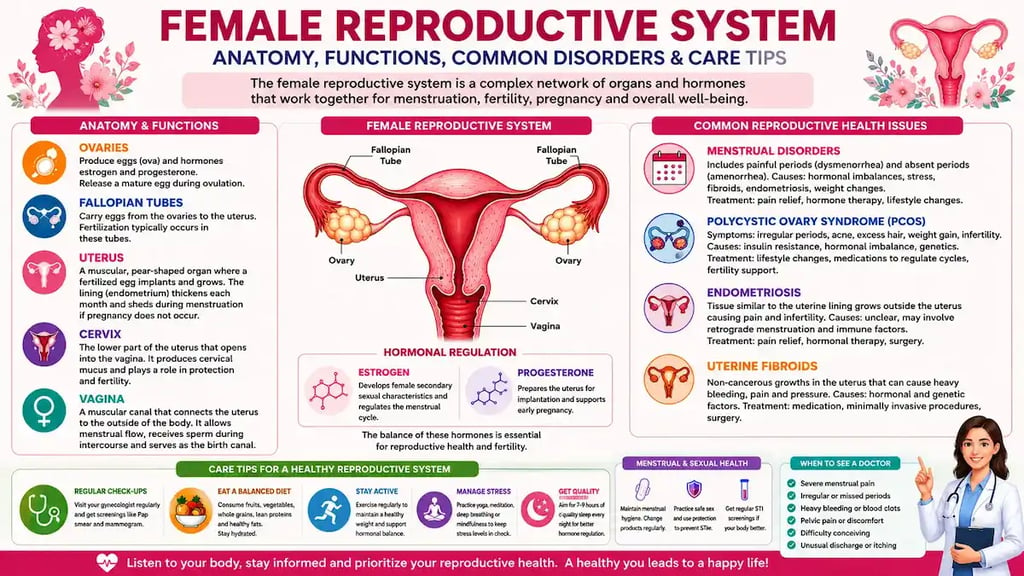
Female Reproductive System: Structure, Functions, Common Health Issues, and Care Tips
Introduction
The female reproductive system is a complex network of organs and hormones that plays a vital role in reproduction, menstruation, pregnancy, and overall health. Understanding how this system works can help women make informed decisions about their reproductive health and recognize potential health concerns early.
This guide explores the anatomy of the female reproductive system, its functions, common reproductive health disorders, and essential care tips for maintaining optimal reproductive wellness.
Understanding the Female Reproductive System
The female reproductive system consists of several organs that work together to support fertility, menstruation, and pregnancy. These organs include the ovaries, fallopian tubes, uterus, cervix, and vagina.
Ovaries
The ovaries are two small organs located on either side of the uterus. Their primary functions include:
Producing eggs (ova)
Releasing eggs during ovulation
Producing hormones such as estrogen and progesterone
These hormones regulate the menstrual cycle and support pregnancy.
Fallopian Tubes
The fallopian tubes connect the ovaries to the uterus and serve as pathways for eggs to travel after ovulation.
Key functions include:
Transporting eggs from the ovaries
Serving as the site of fertilization
Supporting the movement of the fertilized egg toward the uterus
Uterus
The uterus is a muscular, pear-shaped organ where a fertilized egg implants and develops into a fetus.
The inner lining, known as the endometrium, thickens each month in preparation for pregnancy. If pregnancy does not occur, the lining sheds during menstruation.
Vagina
The vagina is a flexible canal connecting the uterus to the external reproductive organs.
Its functions include:
Allowing menstrual flow to exit the body
Receiving sperm during sexual intercourse
Serving as the birth canal during childbirth
Hormonal Regulation
Hormones play a crucial role in reproductive health.
Estrogen
Estrogen is responsible for:
Development of female secondary sexual characteristics
Regulation of the menstrual cycle
Maintenance of reproductive tissues
Progesterone
Progesterone helps:
Prepare the uterus for implantation
Support early pregnancy
Regulate the menstrual cycle
The balance between these hormones is essential for reproductive health and fertility.
Common Female Reproductive Health Issues
Several conditions can affect the female reproductive system. Early diagnosis and proper treatment can improve quality of life and reproductive outcomes.
1. Menstrual Disorders
Menstrual disorders are among the most common reproductive health concerns.
Dysmenorrhea (Painful Periods)
Symptoms include:
Severe menstrual cramps
Lower abdominal pain
Back pain
Nausea
Common causes include hormonal changes, endometriosis, and uterine fibroids.
Amenorrhea (Absent Periods)
Amenorrhea refers to the absence of menstrual periods.
Possible causes include:
Hormonal imbalances
Excessive exercise
Extreme weight loss
Stress
Certain medical conditions
Treatment depends on the underlying cause and may involve lifestyle changes or hormone therapy.
2. Polycystic Ovary Syndrome (PCOS)
PCOS is a hormonal disorder that affects many women of reproductive age.
Symptoms of PCOS
Irregular periods
Excess facial and body hair
Weight gain
Difficulty conceiving
Causes
The exact cause remains unclear, but contributing factors include:
Insulin resistance
Hormonal imbalances
Genetic predisposition
Treatment
Management strategies may include:
Healthy diet and exercise
Weight management
Hormonal medications
Fertility treatments
3. Endometriosis
Endometriosis occurs when tissue similar to the uterine lining grows outside the uterus.
Symptoms
Severe menstrual pain
Pelvic discomfort
Pain during intercourse
Infertility
Risk Factors
Family history
Hormonal factors
Immune system abnormalities
Treatment Options
Pain-relieving medications
Hormonal therapy
Surgical removal of abnormal tissue
Early diagnosis can significantly improve symptom management.
4. Uterine Fibroids
Fibroids are non-cancerous growths that develop within or around the uterus.
Common Symptoms
Heavy menstrual bleeding
Pelvic pressure
Frequent urination
Lower back pain
Causes
Although the exact cause is unknown, factors may include:
Hormonal influences
Genetics
Family history
Treatment Options
Medication
Minimally invasive procedures
Myomectomy
Hysterectomy in severe cases
Importance of Reproductive Health Care
Maintaining reproductive health is essential throughout every stage of life.
Regular Gynecological Checkups
Routine visits to a gynecologist help detect potential problems early.
Recommended screenings include:
Pap smear tests
Pelvic examinations
Breast examinations
Mammograms (as recommended by age and risk factors)
Early detection improves treatment outcomes and overall health.
Healthy Lifestyle Tips for Reproductive Wellness
Eat a Balanced Diet
Nutrition plays a major role in hormonal balance and reproductive health.
Include:
Fresh fruits and vegetables
Whole grains
Lean proteins
Healthy fats
Adequate hydration
Limit processed foods, excessive sugar, and unhealthy fats.
Stay Physically Active
Regular exercise offers several reproductive health benefits:
Maintains healthy body weight
Reduces stress
Improves hormone balance
Lowers the risk of PCOS
Aim for at least 150 minutes of moderate physical activity per week.
Manage Stress Effectively
Chronic stress can affect hormone production and menstrual cycles.
Helpful stress-management techniques include:
Meditation
Deep breathing exercises
Mindfulness practices
Regular relaxation activities
Prioritize Quality Sleep
Poor sleep can negatively affect hormone regulation and reproductive health.
Try to:
Sleep 7–9 hours each night
Maintain a consistent sleep schedule
Reduce screen time before bed
Menstrual Health and Hygiene
Proper menstrual care helps prevent infections and discomfort.
Best Practices
Change pads and tampons regularly
Clean the genital area gently
Use menstrual products correctly
Track menstrual cycles
Monitoring your cycle can help identify irregularities that may require medical attention.
Safe Sexual Practices
Protecting sexual health is a critical aspect of reproductive wellness.
Prevention Tips
Use condoms consistently
Get regular STI screenings
Communicate openly with partners
Consult healthcare providers about contraception options
Safe sexual practices reduce the risk of sexually transmitted infections and unintended pregnancies.
Self-Examinations and Early Detection
Being familiar with your body can help identify potential problems early.
Breast Self-Exams
Regular self-examinations can help detect:
Unusual lumps
Changes in breast shape
Skin abnormalities
Report any unusual findings to a healthcare professional promptly.
Reproductive Health Through Different Life Stages
Puberty
During puberty, hormonal changes trigger:
Breast development
Menstruation
Physical growth
Education about menstrual hygiene and reproductive health is essential.
Adulthood
Key priorities include:
Regular screenings
Pregnancy planning
Fertility awareness
Sexual health management
Menopause
Menopause marks the end of menstrual cycles and fertility.
Common symptoms include:
Hot flashes
Mood changes
Sleep disturbances
Healthy lifestyle habits and medical guidance can help manage these changes effectively.
Conclusion
The female reproductive system is a remarkable and highly coordinated network of organs and hormones that supports menstruation, fertility, pregnancy, and overall well-being. Understanding its functions and recognizing common reproductive health issues can empower women to take proactive steps toward maintaining their health.
Regular medical checkups, a balanced lifestyle, proper menstrual hygiene, stress management, and safe sexual practices are essential for long-term reproductive wellness. By prioritizing reproductive health at every stage of life, women can enjoy better physical, emotional, and overall well-being.
MicroNews © 2025
MicroNews empowers the generation of tomorrow for a brighter future and hope for every individual.
Thanks For Touch with us
We care about your data in our privacy policy.
Popular Post
Top 10 Calcium-Rich Vegetables for Strong Bones & Better Health
Patala Garuda (Rauvolfia serpentina): Health Benefits, Ayurvedic Uses
Ganga Siuli (Parijata Tree): Benefits, Uses, and Medicinal Properties
Freelancing Explained: How to Start, Earn, and Succeed as a Freelancer
Turmeric Benefits: Uses, Nutrition, Ayurveda Importance & Side Effects
Science of Longevity: New Research Reveals How Diet May Shape Lifespan