
Urine Functions, Urine Tests, Urine Color & Common Urinary Diseases
Learn about urine functions, types of urine tests, urine color meanings, common urinary diseases, symptoms, causes, and tips to maintain a healthy urinary system.
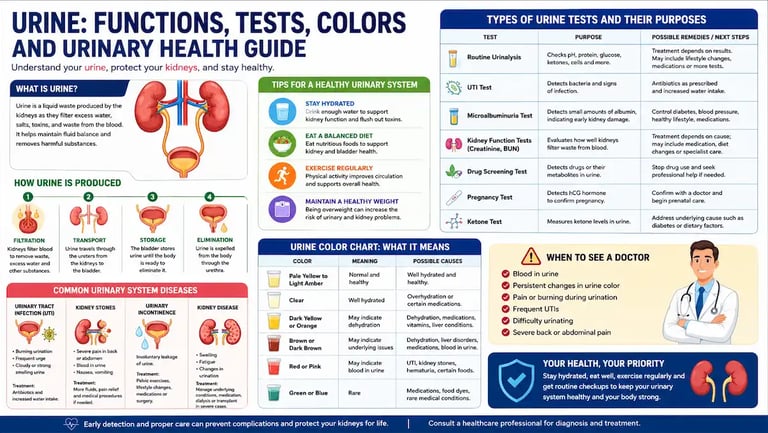
Urine: Meaning, Functions, Urine Tests, Urine Colors, and Common Urinary Diseases
What Is Urine?
Urine is a liquid waste product produced by the kidneys when they filter excess water, salts, toxins, and waste materials from the blood. It is primarily composed of water, electrolytes, and metabolic waste products. The urinary system plays a vital role in maintaining the body's fluid balance and removing harmful substances.
The urinary system consists of:
Together, these organs help produce, store, and eliminate urine from the body.
How Is Urine Produced?
Urine production occurs through a series of important processes:
1. Filtration
The kidneys filter blood to remove excess water, electrolytes, and waste products.
2. Transportation
The filtered fluid, known as urine, travels through the ureters from the kidneys to the bladder.
3. Storage
The urinary bladder stores urine until the body is ready to eliminate it.
4. Elimination
Urine leaves the body through the urethra during urination.
Importance of a Healthy Urinary System
Maintaining urinary health is essential for overall well-being. Here are some effective ways to keep your urinary system healthy:
Stay Hydrated
Drink plenty of water throughout the day to support kidney function and flush out toxins.
Eat a Balanced Diet
Consume fruits, vegetables, whole grains, and lean proteins to support kidney and bladder health.
Exercise Regularly
Physical activity improves blood circulation and supports overall urinary system function.
Maintain a Healthy Weight
Excess body weight can increase the risk of urinary incontinence, kidney disease, and other urinary disorders.
Common Urinary System Diseases
Several health conditions can affect the urinary tract and kidneys.
Urinary Tract Infection (UTI)
A UTI occurs when bacteria infect the urinary system.
Common Symptoms:
Burning sensation during urination
Frequent urge to urinate
Cloudy or strong-smelling urine
Treatment:
Antibiotics prescribed by a doctor
Increased water intake
Kidney Stones
Kidney stones are hard mineral deposits that form inside the kidneys.
Symptoms:
Severe back or abdominal pain
Blood in urine
Nausea and vomiting
Treatment:
Increased fluid intake
Pain medications
Medical procedures for larger stones
Urinary Incontinence
Urinary incontinence is the involuntary leakage of urine due to loss of bladder control.
Treatment:
Pelvic floor exercises
Lifestyle modifications
Medications or surgery in severe cases
Kidney Disease
Kidney disease affects the kidneys' ability to filter waste effectively.
Risk Factors:
High blood pressure
Family history of kidney disease
Treatment:
Managing underlying conditions
Medication
Dialysis or kidney transplant in advanced cases
Types of Urine Tests and Their Purpose
Urine tests, also known as urinalysis, help detect infections, kidney disorders, diabetes, and other health conditions.
1. Routine Urinalysis
Purpose:
Examines urine for pH levels, protein, glucose, ketones, and blood cells.
Possible Remedies:
Diabetes management for high glucose levels
Kidney treatment if protein is detected
Further diagnostic testing if abnormalities are found
2. Urinary Tract Infection (UTI) Test
Purpose:
Detects bacteria and signs of infection in the urinary tract.
Treatment:
Antibiotics
Increased hydration
3. Microalbuminuria Test
Purpose:
Measures small amounts of albumin in urine, indicating early kidney damage.
Treatment:
Control blood sugar and blood pressure
Healthy lifestyle habits
Doctor-prescribed medications
4. Kidney Function Tests
Examples include:
Creatinine Test
Blood Urea Nitrogen (BUN) Test
Purpose:
Evaluates how efficiently the kidneys filter waste from the blood.
Treatment:
Depends on the underlying cause and may include medication, dietary changes, or specialized kidney care.
5. Drug Screening Test
Purpose:
Detects drugs or their metabolites in urine.
Treatment:
Discontinue substance use
Seek professional addiction treatment if needed
6. Pregnancy Test
Purpose:
Detects Human Chorionic Gonadotropin (hCG), a hormone produced during pregnancy.
Next Steps:
Confirm pregnancy with a healthcare provider
Begin prenatal care
7. Ketone Test
Purpose:
Measures ketones in urine, which may indicate fat breakdown for energy.
Possible Causes:
Uncontrolled diabetes
Fasting
Low-carbohydrate diets
Treatment:
Address the underlying condition under medical supervision.
Urine Color Chart and What It Means
Urine color can provide important clues about hydration levels and overall health.
Pale Yellow to Light Amber
Meaning: Normal and healthy urine color.
Clear Urine
Meaning: Well hydrated or possibly overhydrated.
Dark Yellow or Orange Urine
Possible Causes:
Dehydration
Certain medications
Vitamin supplements
Liver conditions
Brown or Dark Brown Urine
Possible Causes:
Severe dehydration
Liver disease
Certain medications
Blood in urine
Red or Pink Urine
Possible Causes:
Blood in urine (Hematuria)
Kidney stones
Urinary tract infections
Certain foods such as beets
Green or Blue Urine
Possible Causes:
Certain medications
Food dyes
Rare medical conditions
When Should You See a Doctor?
Consult a healthcare professional if you experience:
Blood in urine
Persistent changes in urine color
Pain during urination
Frequent urinary tract infections
Difficulty urinating
Severe lower back or abdominal pain
Early diagnosis and treatment can help prevent serious complications.
Conclusion
Urine plays a crucial role in removing waste and maintaining the body's fluid balance. Understanding urine production, urine tests, urine color changes, and common urinary diseases can help you identify potential health concerns early. Maintaining proper hydration, a balanced diet, regular exercise, and routine health checkups are key to supporting a healthy urinary system.
If you notice unusual symptoms or abnormal urine test results, seek medical advice for accurate diagnosis and appropriate treatment.
Related Stories
MicroNews © 2025
MicroNews empowers the generation of tomorrow for a brighter future and hope for every individual.
Thanks For Touch with us
We care about your data in our privacy policy.
Popular Post
Top 10 Calcium-Rich Vegetables for Strong Bones & Better Health
Patala Garuda (Rauvolfia serpentina): Health Benefits, Ayurvedic Uses
Ganga Siuli (Parijata Tree): Benefits, Uses, and Medicinal Properties
Freelancing Explained: How to Start, Earn, and Succeed as a Freelancer
Turmeric Benefits: Uses, Nutrition, Ayurveda Importance & Side Effects
Science of Longevity: New Research Reveals How Diet May Shape Lifespan